Excellent interview for consciousness researchers out there....
Tuesday, November 2, 2010


Sunday, October 17, 2010
Student Tips: Working with chemicals (Glues & Paints) for model making
There are various types of glues and paints out there in the market. You will have to use these and other materials that have chemicals in them at one point or another during your architecture student career.
During my first studio class, I noticed I started developing bad reactions to glues such as Loctite, Zap-a-gap, EZ bond, Super Glue, Crazy Glue, Weldon, etc. I tried the liquid glues, the gel types and I tried wearing a mask & goggles but I was showing signs of allergies to these chemicals. I think the chemical that I react badly towards mostly is Cyanoacrylate. Over the past 3 semesters it has gotten worse and now I can't even go near an open container of glue for a few seconds. I also realized, the hard way, that my body reacts the same way for certain types of spray paint and last time I ended up at the doctor's office having to take an adrenaline shot and Asthma medication.
During my first studio class, I noticed I started developing bad reactions to glues such as Loctite, Zap-a-gap, EZ bond, Super Glue, Crazy Glue, Weldon, etc. I tried the liquid glues, the gel types and I tried wearing a mask & goggles but I was showing signs of allergies to these chemicals. I think the chemical that I react badly towards mostly is Cyanoacrylate. Over the past 3 semesters it has gotten worse and now I can't even go near an open container of glue for a few seconds. I also realized, the hard way, that my body reacts the same way for certain types of spray paint and last time I ended up at the doctor's office having to take an adrenaline shot and Asthma medication.
If you are like me and can't use these materials anymore, don't give up Architecture just yet. I would like to share some work-around methods I've figured out that might help you as well.
- Use natural rubber based glues with wood and paper: there are so many brands out there in the market such as Tacky Glue, Sobo, Elmer's, etc. They work well with wooden elements and paper material such as museum board, chip board, etc. They do take slightly longer to dry than gel based chemical glues (maybe 1 - 2 minutes max). But it does the trick.
- Cut grooves & make joints: When using even small wooden elements, you can cut small grooves or make small joints so it gives extra strength to the bonds you make with the rubber glue. Some of the types of joints I do are: Butt Joints, Lap Joints
- Plexi glass: Plexi glass is hard to use. Cutting it is difficult, scoring it is difficult, handling it is difficult. The last thing you want is restriction with the types of glues you can work with. This is the biggest challenge I am facing right now with not being able to use chemical bonding glues. I have come up with 2 solutions for this. I use linear elements to secure the plexi glass. One of the methods is to drill small holes at the corners or identified places and use wooden linear element running through the plexi that will be glued to the main structure. The other method is to frame the plexi with linear elements. I am also going to try a new glue I found that doesn't have that chemical, I will use it later tonight or tomorrow for the first time and I will keep you posted about that.
- Use a painter's mask, goggles and gloves: Don't use a surgical mask, take my word for it, it doesn't stop giving you the allergies. You can buy a painter's mask at any Home Depot or similar store.

Thursday, September 9, 2010
Retrocognitions - Interview with Wagner Alegretti
I found this video on YouTube. It is an interview with Wagner Alegretti, the author of the book Retrocognitions: An investigation into memories of past lives and the periods between lives.
The video is in Portuguese but you can see English subtitles.
If you are interested in watching the whole video, click here
Sunday, August 29, 2010
Student Tips - Understanding Architectural Principles
Understanding fundamental principles in architecture helped me when I started my design classes. It helped me work on a concept and design based on the concept that I selected.
Some of the important elements I got started with and still working on today are:
Some of the important elements I got started with and still working on today are:
- Symmetry
- Axis
- Proportion
- Modular
- Scale
- Golden Section
- Hierarchy
- Limits, Boundaries & Edges
- Path
- Transition
- Transformation
- Order & Organization
- Epicenter
One of the best books that I referenced to understand these concepts were Francis DK Ching's Architecture: Form, Space & Order. If you are an architecture student, I would highly recommend for your personal library.
On the internet you can find many valuable resources too. I found this article on Vitruvius's Fundamentals of Architecture.
My design professor keeps urging how important it is to work on a concept and design based on that. Also that we should able to present and justify why we decided to design a certain element in a specific way and why it is in alignment with our concept.
My design professor keeps urging how important it is to work on a concept and design based on that. Also that we should able to present and justify why we decided to design a certain element in a specific way and why it is in alignment with our concept.
Wednesday, August 25, 2010
Student Tips - Architectural Drawing
Most schools, if not all, will start their students with manual architectural drawings before moving on to computer based applications.
According to many experienced architects, free hand sketching is vital at any stage of an architects career. Since I have been drawing since I was in my teens, I found it quite enjoyable to start sketching again and I know most students in my classes carry multiple sketchbooks with them and sketch whenever they can. This is a good habit to get into early on....
Another thing that our professors have us practice is to make various drawings of constructs (Models) we make and make analytical drawings. These exercises were not quite enjoyable in the beginning but I have come to appreciate the analytical drawings a lot.
There are various types of architectural drawings. I found this article in Wikipedia that describe each type in detail. The main type of drawings one will do at the very beginning stage of their architectural career as a student are these:

One of the other most important type of drawing a student must try to understand and excel at are perspective drawings. Perspective drawings interpret apparent dimensions into a flat surface using a mathematical system.
There are a few types of perspective drawings:
 Single point Perspective drawing - (c) utdallas.edu gallery
 Two-point Perspective drawing - from utdallas.edu gallery

There are a bunch of videos in YouTube on how to draw perspectives. I like this one a lot...
According to many experienced architects, free hand sketching is vital at any stage of an architects career. Since I have been drawing since I was in my teens, I found it quite enjoyable to start sketching again and I know most students in my classes carry multiple sketchbooks with them and sketch whenever they can. This is a good habit to get into early on....
Another thing that our professors have us practice is to make various drawings of constructs (Models) we make and make analytical drawings. These exercises were not quite enjoyable in the beginning but I have come to appreciate the analytical drawings a lot.
There are various types of architectural drawings. I found this article in Wikipedia that describe each type in detail. The main type of drawings one will do at the very beginning stage of their architectural career as a student are these:

Image from Wikipedia Gallery

One of the other most important type of drawing a student must try to understand and excel at are perspective drawings. Perspective drawings interpret apparent dimensions into a flat surface using a mathematical system.
There are a few types of perspective drawings:
- Single-Point Perspective - Lines extending from all objects in the drawing converge back to one single vanishing point in the horizon.
Single point Perspective drawing - (c) utdallas.edu gallery- Two-Point Perspective - There are 2 vanishing points at the horizon. Lines originating at these 2 points define the depth and spaces in the drawing.
Two-point Perspective drawing - from utdallas.edu gallery- There are also multipoint perspectives such as 3 point perspectives. I have not done any drawings with 3 point perspectives yet.
There are a bunch of videos in YouTube on how to draw perspectives. I like this one a lot...
Monday, June 28, 2010
Study Abroad Trip: Part 4 - Turkey
Day 9: Turkey


 Ephesus, Turkey - Images (c) Manori Sumanasinghe 2010


 St. John's ChImages (c) Manori Sumanasinghe 2010
We had an opportunity to visit a Carpet Weaving school of Turkey Ministry of Education. It was a beautiful experience. If you want to buy a Genuine Turkish Carpet, we heard this is one of the cheapest places you can find one.


 Carpet Weaving School, Turkey - Images (c) Manori Sumanasinghe 2010
I have always admired the beautiful hand-woven rugs but never had the desire to make one mine. After visiting this place, I now can't wait till the day I can own a hand woven Turkish rug.
We then went to visit house of Mary, the place where Mary - mother of Jesus, spent her last days. A small charming chapel does not have a burial chamber for this is not her last resting place but they still have sermons for the tourists and the Christian Minority to take part in. I have never sat through an entire mass service and a sermon before and I had the privilege to do so here. Though I am not a Christian or Catholic, I appreciated the experiences.

 House of Mary - Image (c) Manori Sumanasinghe 2010
I hope I get to visit Turkey in the near future and spend more time there.
Turkey, to my surprise, was a lush, well cultured, rich and beautiful country that I would have never imagined I would be so taken by everything they had to offer. I was so fascinated and felt a very deep connection to the areas we visited, I made a mental note that this is a place I would want to visit and spend at least 2 weeks exploring the place.
We first visited the ancient Ephesus area. Most notably known for the Library of Celcus, the entire ancient city, in ruins today, spreads over a very large area. I would say, this city must have been one of the leading modern cities of its time; it had an amphitheater, hospital, advanced and complex waste water & portable water system, it had public bath houses, public toilet systems, it had a LIBRARY !!!, market place and of course housing.
We first visited the ancient Ephesus area. Most notably known for the Library of Celcus, the entire ancient city, in ruins today, spreads over a very large area. I would say, this city must have been one of the leading modern cities of its time; it had an amphitheater, hospital, advanced and complex waste water & portable water system, it had public bath houses, public toilet systems, it had a LIBRARY !!!, market place and of course housing.


 Ephesus, Turkey - Images (c) Manori Sumanasinghe 2010
If visiting the ruins weren't enough, we had the opportunity to enjoy the local culture and hospitality a bit. One of the things I will not forget about Turkey was how nice all locals were. They are extremely friendly and courteous.
Then we made our way to Church of St. John the Apostle. It is quite amazing how after all these years since his time, a church with the final resting place of St. John the apostle is still intact.
Then we made our way to Church of St. John the Apostle. It is quite amazing how after all these years since his time, a church with the final resting place of St. John the apostle is still intact.


 St. John's ChImages (c) Manori Sumanasinghe 2010
We had an opportunity to visit a Carpet Weaving school of Turkey Ministry of Education. It was a beautiful experience. If you want to buy a Genuine Turkish Carpet, we heard this is one of the cheapest places you can find one.


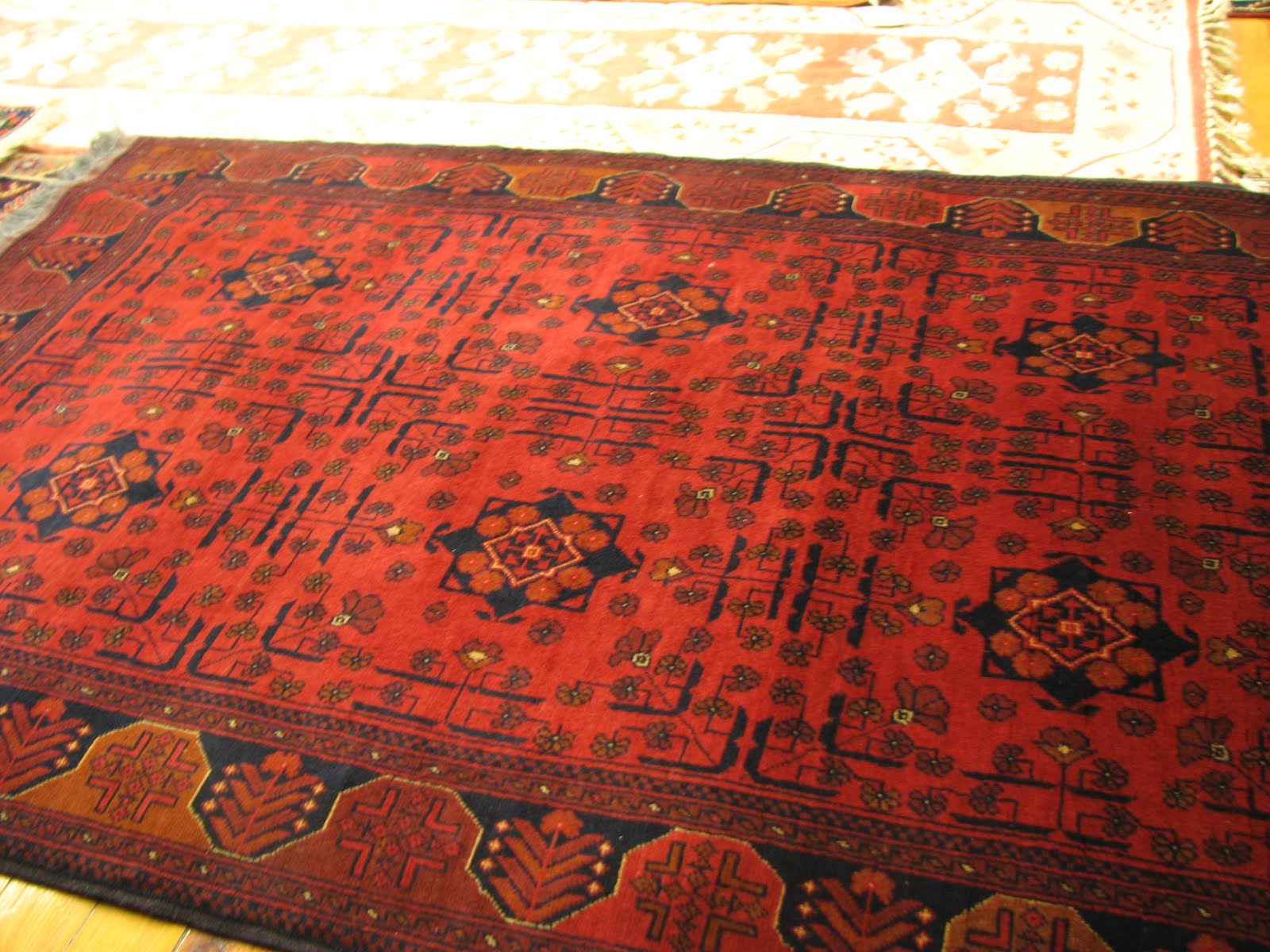 Carpet Weaving School, Turkey - Images (c) Manori Sumanasinghe 2010
I have always admired the beautiful hand-woven rugs but never had the desire to make one mine. After visiting this place, I now can't wait till the day I can own a hand woven Turkish rug.
We then went to visit house of Mary, the place where Mary - mother of Jesus, spent her last days. A small charming chapel does not have a burial chamber for this is not her last resting place but they still have sermons for the tourists and the Christian Minority to take part in. I have never sat through an entire mass service and a sermon before and I had the privilege to do so here. Though I am not a Christian or Catholic, I appreciated the experiences.

 House of Mary - Image (c) Manori Sumanasinghe 2010
I hope I get to visit Turkey in the near future and spend more time there.
Thursday, June 24, 2010
Study Abroad Trip: Part 3 - Greece: Athens & Rhodes
Day 7: Athens, Greece
We weren't certain if we would actually get to visit Athens. It was only the day before our scheduled arrival, Greece had massive strikes and violence in Athens due to the failing economy. The port workers were also on strike so even if the cruise line said everything would be resolved by the time we were scheduled to arrive there, I was still skeptical. But thankfully, I was wrong and the strike ended at 6am and we birth the port at 9am.
Athens is a very interesting city. One of the oldest cities in the world, due to population growth and urbanization, the city has been pushed to its limits. For a European city its quite dirty but, then again it is one of the oldest mega cities in the world.
But it is still worth visiting Athens because there are only handful of places that can beat that experience.


 The Acropolis: Athens, Greece - Images (c) Manori Sumanasinghe 2010
Athens is one of those places everyone should try to visit at least once in their lifetime.
 Panoramic Athens - Image (c) Manori Sumanasinghe 2010
The other highlight of Athens was visiting the New Acropolis Museum. Photographs of inside of the museum were not allowed so I don't have any images to share with you. But this amazing structure by Bernard Tschumi is one of the most elegant, thought provoking architectural masterpieces I have visited this life.
It is pretty cool how the structure is build on an actual architectural dig, without destroying or blocking the site. You can still see the excavations happening below the museum. And through the glass floors of each floor, as you browse through the exhibits, you can observe the excavation from different angles.
It is pretty cool how the structure is build on an actual architectural dig, without destroying or blocking the site. You can still see the excavations happening below the museum. And through the glass floors of each floor, as you browse through the exhibits, you can observe the excavation from different angles.

 The Entrance to the New Acropolis Museum - Image (c) Manori Sumanasinghe 2010
 The archeological dig underneath the New Acropolis Museum - Image (c) Manori Sumanasinghe 2010
 The New Acropolis Museum - Image (c) Manori Sumanasinghe 2010
Day 8: Rhodes, Greece
This charming Greek Island played an important role in the ancient Greece. Rhodes, famous for Colossus of Rhodes has two main things one must explore. The old city, which is the city built in the ancient Greek days with the acropolis of Rhodes and the new city or the medieval city built by the Knights Templar.

 The old city / The Acropolis of Rhodes - Image (c) Manori Sumanasinghe 2010
 The Medieval City, Rhodes, Greece - Image (c) Manori Sumanasinghe 2010
Both days, I wish I had more time to see and to explore the cities and enjoy the beauty and the craftsmanship of these ancient creations.
Subscribe to:
Posts (Atom)